Japanese Maple Spring Weather Protection: Frost, Wind & Snow
Your Japanese Maple Just Leafed Out — Here's How to Keep It Safe
The tender new foliage of a Japanese maple is one of spring’s most fleeting pleasures — and one of its most fragile. Once your tree breaks dormancy and pushes out its first leaves, the protective armor of winter dormancy is gone. Cold snaps, desiccating winds, and heavy late-season snows can cause serious damage to growth that, just days before, was safely locked inside a bud. The good news: with a little preparation and the right response, you can protect your trees and help them recover quickly.
🌡️ Frost & Freeze Events
A late frost after leafing out is the single greatest spring threat. Leaf tissue is soft and has no cold tolerance once dormancy breaks — temperatures at or below freezing can kill new growth outright.
Cover in-ground trees with bed sheets or frost cloth before nightfall when a freeze is forecast. Drape loosely so the fabric touches as little foliage as possible.
Move container trees into an unheated garage or shed overnight — unheated is key, as a warm space can further accelerate growth into the cold.
Remove coverings promptly in the morning once temperatures rise above freezing; trapped heat under covers can also damage foliage.
💨 Cold, Drying Winds
Cold spring winds cause two types of harm: physical damage to soft new growth, and desiccation — the same drying effect that harms trees in winter, now acting on vulnerable leafed-out tissue.
Erect temporary windbreaks using stakes and 2–3 layers of burlap on the windward side of the tree. Keep the burlap a foot or more away from the canopy — you want to slow the wind, not wrap the foliage.
Anti-desiccant sprays (such as Wilt-Pruf) applied to the foliage can reduce moisture loss during prolonged windy periods.
Siting your maple near a south-facing wall or structure offers natural, permanent wind protection — worth considering for future plantings.
❄️ Late-Season Snow & Ice
A wet spring snow on a leafed-out maple is a recipe for broken branches. The leaves catch far more snow than bare wood, and slender branch tips can snap under the weight.
Brush snow off branches by hand or with a soft broom — work from the bottom of the tree upward, and do it gently. Never shake the tree or strike branches.
Act as soon as possible after snowfall; wet snow is heaviest, and as it lingers it can freeze into ice, which is far more damaging and difficult to remove safely.
For smaller trees, a temporary teepee of wooden stakes and burlap draped over the canopy before a predicted snowfall offers excellent protection.
🌱 If Damage Has Already Occurred
Frost-damaged leaves will turn black, curl, and die. This looks alarming, but it does not necessarily mean the tree is dying. Most established Japanese maples will push a second flush of growth — patience is the most important tool in your kit.
Do not prune immediately. Damaged leaves protect the buds beneath them. Let the leaves dry and drop on their own — pruning too soon removes buds that may still push healthy growth.
Water thoroughly right after a freeze event. Cold stress dehydrates leaf tissue just as summer heat does; rehydrating the tree is the first and most important step.
After about a week, apply a light dose of liquid fertilizer to give the tree energy to push new growth. Wait two weeks before any follow-up application — don’t over-fertilize in an attempt to hurry recovery.
Avoid heavy nitrogen fertilizers once the frost threat has passed, as they produce lush but structurally weak growth that is more susceptible to the next cold snap.
Quick Reference: At a Glance
Easy to Grow Maples
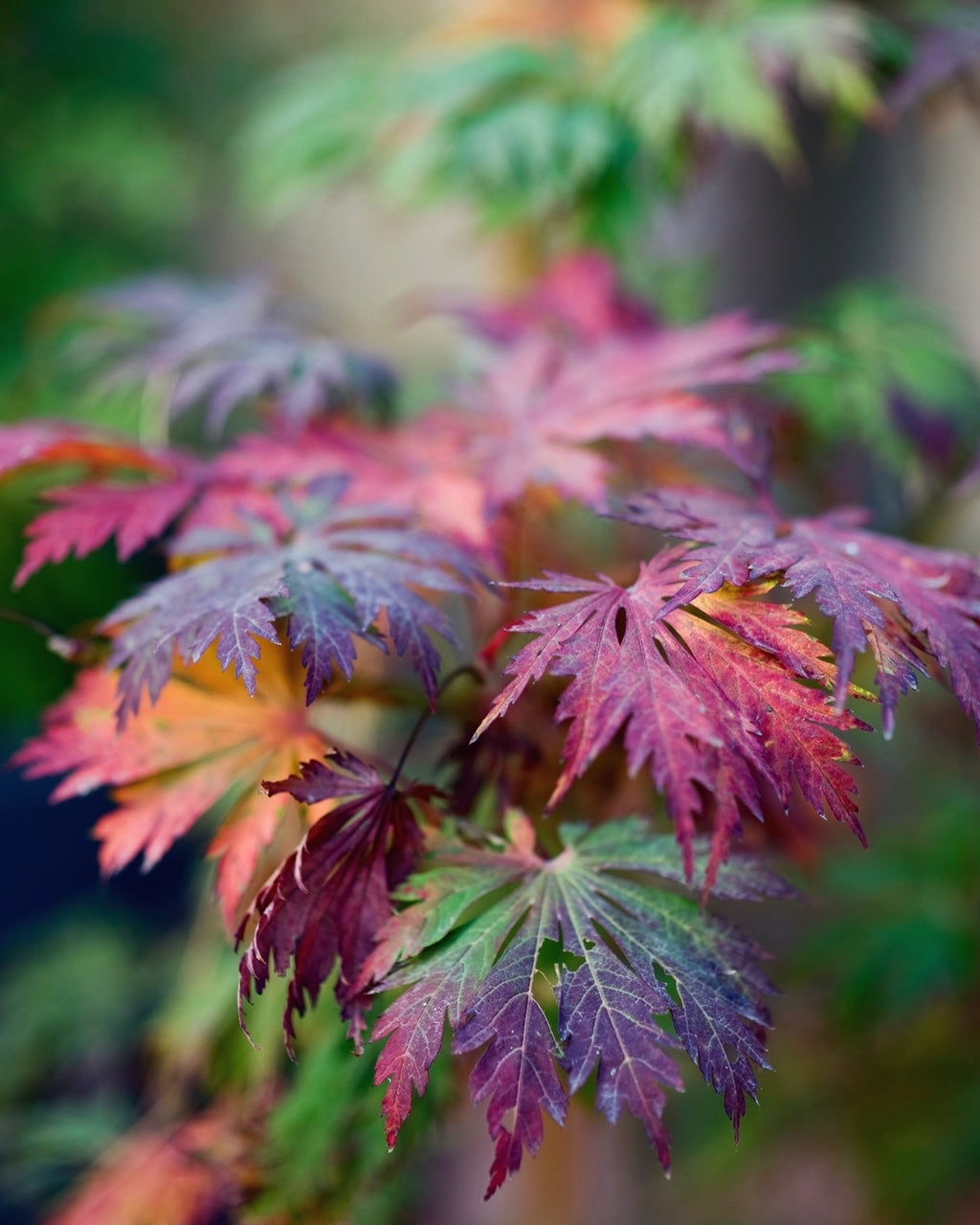
A. japonicum Aconitifolium 'Dancing Peacock'